

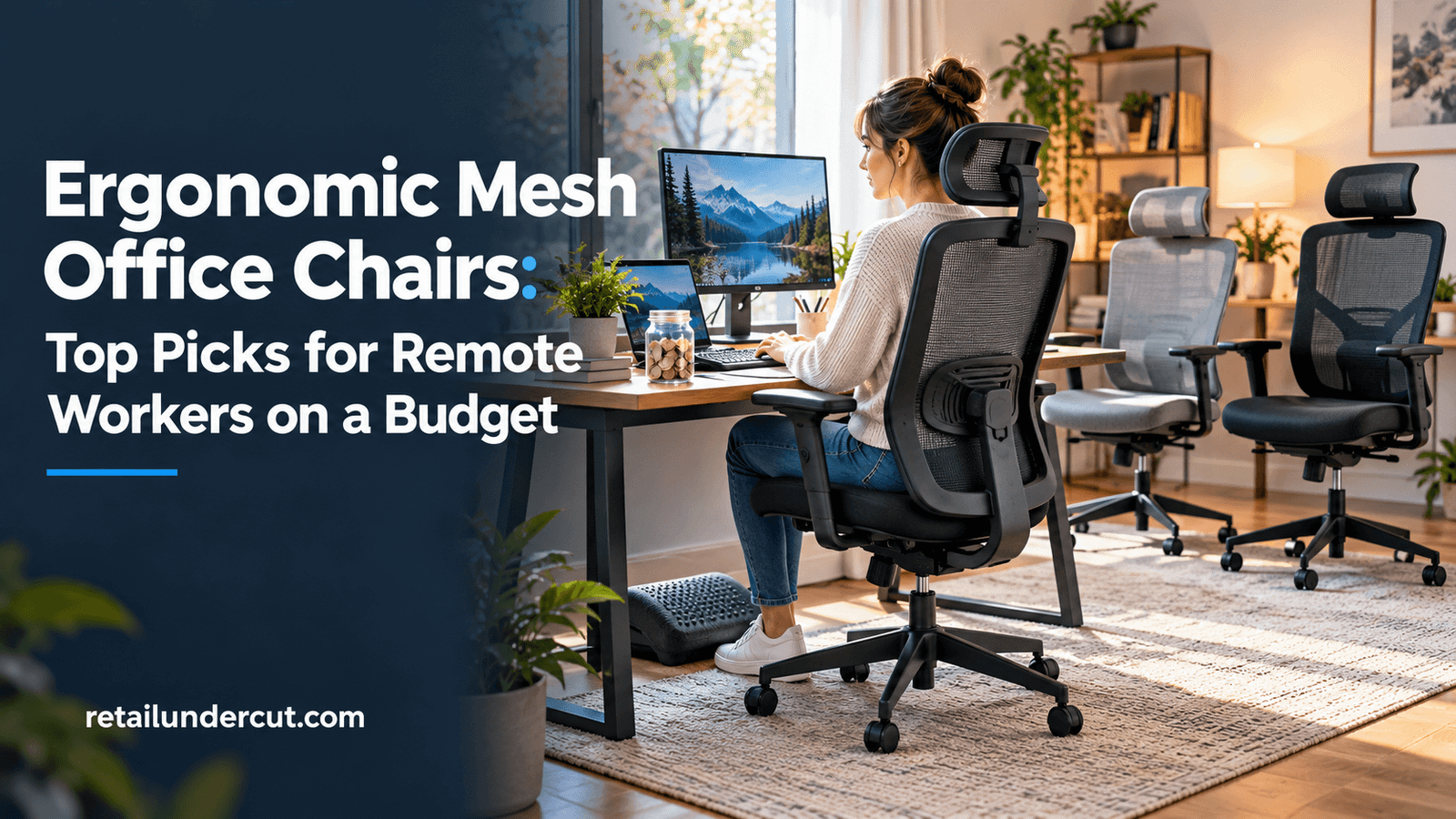
Working from a dining chair or an old office hand-me-down feels manageable for the first few weeks of remote work, right up until your lower back starts reminding you otherwise. An ergonomic mesh office chair is one of the few home office upgrades that pays for itself in comfort almost immediately, and the good news is that genuinely supportive options now exist well outside the four-figure price range that designer brands like to charge. This guide covers what actually makes a mesh chair ergonomic, which features are worth paying for, and where you can reasonably cut costs without sacrificing your posture.
Mesh seating has become the default recommendation for a reason that has nothing to do with trends. Breathable mesh distributes body heat and pressure far more evenly than solid foam cushions, which matters enormously if you’re sitting for six or more hours a day in a room without perfect climate control. Foam chairs tend to compress unevenly over months of daily use, developing soft spots that quietly encourage bad posture, while a well-tensioned mesh back maintains consistent support because the tension is spread across the entire weave rather than concentrated in one cushion. The one tradeoff worth knowing upfront is that cheaper mesh can feel less plush on first sit compared to foam, though most people stop noticing this within the first week of regular use.
Not every adjustment listed in a product description meaningfully improves your posture, and it’s easy to overpay for features you’ll set once and never touch again. Lumbar support that adjusts both in height and depth is worth prioritizing above almost everything else, since the lower back is where most remote workers develop the most discomfort over time. Seat depth adjustment matters more than people expect too, particularly for anyone under 5’5″ or over 6’2″, because a fixed seat pan that’s too deep will press uncomfortably against the back of your knees no matter how good the lumbar support is. Armrests that adjust in height, width, and pivot angle help keep your shoulders relaxed instead of hunched, which indirectly reduces neck strain even though the armrests themselves have nothing to do with your neck.
This tier has become remarkably competent over the past few years, largely thanks to brands that sell directly online and skip traditional retail markups. Look for a chair with adjustable lumbar support and at least basic seat height and tilt tension adjustment, since these two features affect daily comfort more than any other spec at this price. Weight capacity is worth double-checking here too, since budget frames sometimes cut costs on the base and gas cylinder rather than the visible mesh and cushioning. A chair in this range won’t include every premium adjustment, but a well-chosen budget pick genuinely outperforms an unsupportive chair that cost three times as much simply because someone bought based on looks alone.
This is genuinely the sweet spot for most full-time remote workers. Chairs in this range typically add four-dimensional armrests, deeper seat depth adjustment, and a synchro-tilt mechanism that lets the backrest and seat recline at a coordinated ratio rather than moving as one rigid piece. Build quality also takes a noticeable step up, with sturdier frames and mesh that holds its tension for years rather than sagging within the first twelve months. If you’re going to spend real money on one home office upgrade, this bracket is where the return on comfort per dollar spent is highest.
Beyond roughly $450, you’re mostly paying for warranty length, materials engineering, and diminishing ergonomic returns. Premium chairs often carry warranties of ten years or more and use higher-grade mesh that resists stretching under years of daily pressure, which matters if you’re planning to keep the same chair for a decade rather than upgrading again in three or four years. If you have a diagnosed back condition or spend ten-plus hours seated most days, the extra investment in precise, doctor-recommended ergonomics can be justified. For the average remote worker without specific medical needs, though, a well-chosen mid-range chair delivers the vast majority of the same day-to-day comfort.
The most frequent mistake is buying based on appearance in a product photo rather than checking the actual adjustment ranges listed in the specifications. A chair can look identical to a much more expensive model while offering a fraction of the adjustability underneath the mesh. Another common misstep is ignoring the weight capacity and frame material, which affects long-term durability far more than the cushioning does; a chair rated well below your body weight will wear out its gas cylinder and tilt mechanism years before a properly rated one would. Finally, many buyers skip reading the assembly instructions closely and end up with a wobbly base or misaligned armrests, which can make an otherwise excellent chair feel unstable simply due to a loose bolt that was never fully tightened during setup.
Mesh chairs need very little maintenance, but a few small habits noticeably extend their lifespan. Vacuum the mesh weave every few weeks to prevent dust from settling into the weave and making it feel stiffer over time, and avoid placing the chair in direct sunlight for extended periods, since UV exposure gradually weakens synthetic mesh fibers and can fade the color unevenly. Check the bolts on the armrests and base every six months or so, since normal daily movement can gradually loosen fittings, and a five-minute tightening session once or twice a year prevents the wobbling that often gets mistaken for a manufacturing defect.
Shoppers researching this category often bounce between a few recognizable names, and it helps to understand what separates them beyond price. Premium ergonomic brands built their reputation on decades of biomechanical research and tend to offer the most refined synchro-tilt mechanisms along with the longest warranties in the industry, sometimes covering the frame and mechanism for over a decade. Newer direct-to-consumer ergonomic brands built their appeal around bringing similar core adjustability to a noticeably lower price by selling online and cutting traditional retail markup, which is why they’ve become a popular mid-range comparison point for anyone who wants premium-adjacent features without the premium invoice. Generic budget task chairs, meanwhile, focus on covering the basics reliably rather than chasing extra adjustability, which is exactly why they remain a sensible entry point for a first home office setup or a secondary chair in a guest room turned office.
Neither material alone fixes back pain, adjustability does. That said, mesh chairs with adjustable lumbar support tend to be recommended more often because the tensioned weave keeps consistent contact with your lower back throughout the day, whereas foam can compress unevenly over time and gradually lose the support it offered when new.
For most full-time remote workers, the $200 to $450 range delivers the best balance of adjustability, durability, and price. Spend less if you’re only sitting for a few hours a day or sharing the chair across a household, and consider spending more only if you have a specific medical need or plan to keep the chair in daily use for well over five years.
Not entirely, since the two solve slightly different problems. A well-adjusted ergonomic chair reduces strain while you’re seated, while a standing desk helps break up long stretches of sitting altogether. Many remote workers find the best results come from pairing a supportive chair with occasional standing breaks rather than relying on either solution alone.
Check the listed seat width, seat depth range, and maximum weight capacity against your own measurements rather than relying on generic size labels like small, medium, or large, which vary a lot between brands. If you’re notably taller, shorter, wider, or narrower than an average frame, look specifically for chairs that advertise a wide adjustment range on seat height and depth, since these are the two dimensions that most affect fit for people outside a standard size range.
Office furniture follows its own discount calendar that doesn’t always line up with typical electronics sales. Back-to-school season in late summer and the broader end-of-year sales period in November both tend to bring meaningful markdowns, partly because retailers clear inventory ahead of new model years. Many direct-to-consumer chair brands also run their own periodic promotions independent of major shopping holidays, so it’s worth signing up for a brand’s email list if you’re not in a rush, since first-order discount codes are common and can meaningfully offset the price difference between budget and mid-range models. Trying a floor model in a physical store, if one is available near you, before ordering the same chair online is also a smart way to confirm fit without paying for return shipping on a heavy item if it doesn’t work out.
An ergonomic mesh office chair is one of the rare home office purchases where the price tag doesn’t need to match the discomfort you’re trying to solve. Focus on real adjustability over brand names, size the chair to your actual body rather than a generic label, and take the time to set it up correctly once it arrives, since even the best chair on the market won’t help much if the lumbar support is sitting at the wrong height. Get those fundamentals right, and a genuinely comfortable workday is well within reach at almost any budget covered in this guide.
That’s the real measure of value in this category, and it’s worth remembering the next time a flashy spec sheet tries to convince you otherwise.
Your back will thank you long after the receipt is forgotten.
Choose thoughtfully, sit correctly, and let the chair do the quiet work of keeping you comfortable through every workday ahead.
A great chair is only one piece of a comfortable remote workspace. Our guides on essential tech accessories every remote worker needs and must-have tools for freelancers and digital nomads both cover complementary equipment worth pairing with a good chair. Check our thrifty sales guide before buying at full price, and browse our full technology category on Retail Under Cut for more home office guides.








Don’t miss a thing! Sign up to get new content sent directly to your inbox.