
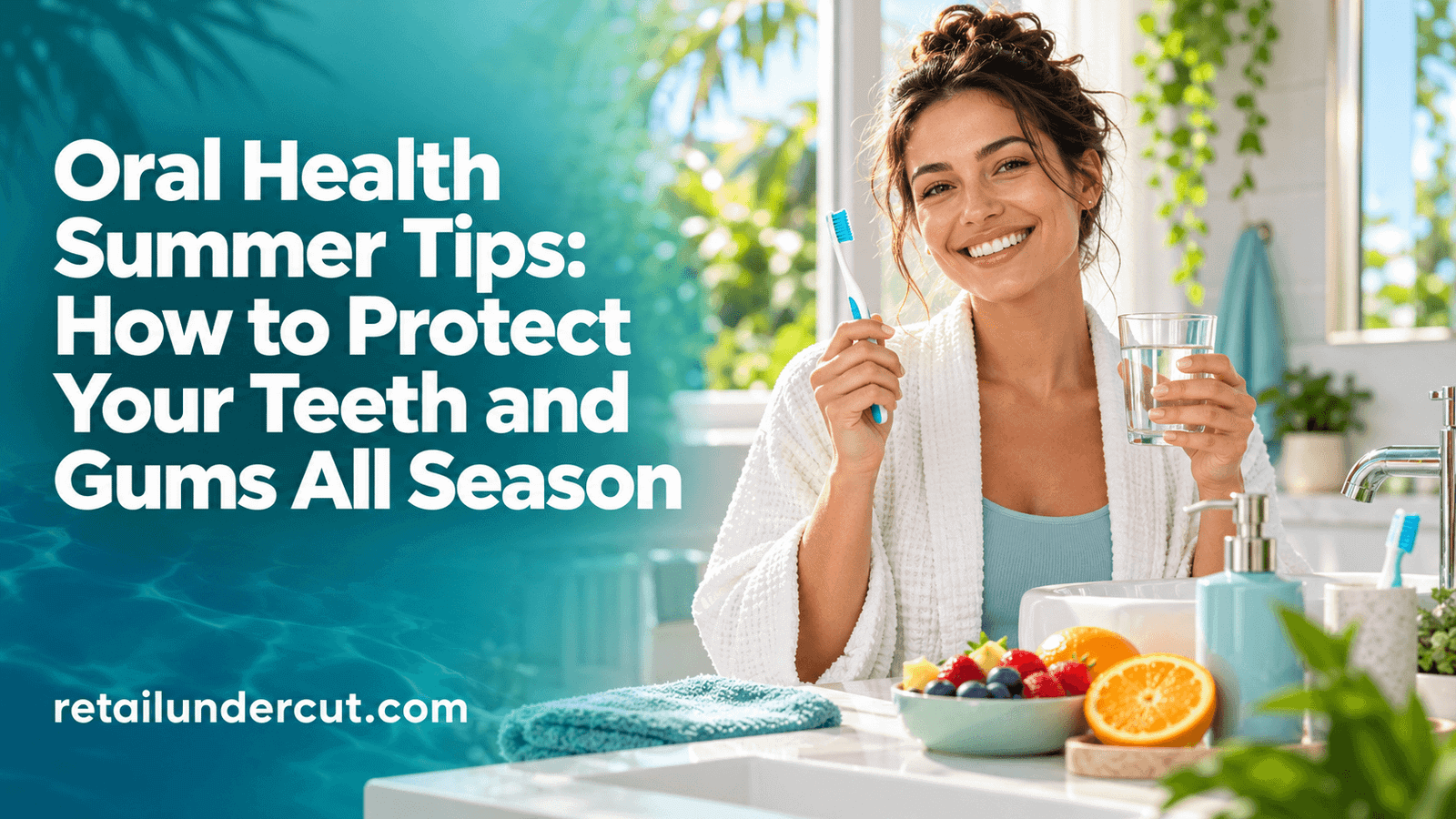
Oral health summer tips rarely get the same attention as sunscreen and hydration advice, yet the season is genuinely tough on your mouth. Long days in the heat, back-to-back iced drinks, pool afternoons, barbecues loaded with sugary sauces, and travel schedules that throw off your normal brushing routine all converge in the same few months. Dentists see a predictable rise in certain complaints every summer, and almost all of it is preventable with a few targeted habits.
This guide walks through why summer is uniquely hard on oral health, the most common problems that show up between June and September, and the specific daily habits that keep your teeth and gums protected while you still enjoy everything the season offers.
Summer changes three things that matter enormously for oral health: how much water you lose through sweat and sun exposure, what you eat and drink, and how consistent your daily routine stays. Each of these has a direct, measurable effect on your teeth and gums.
Heat increases fluid loss through sweat, and many people simply don’t replace it fast enough. Saliva is your mouth’s primary defense system: it neutralizes the acids produced by bacteria, washes away food particles, and delivers minerals that help re-harden tooth enamel after acid exposure. When you’re dehydrated, saliva production drops, and that protective rinse-and-buffer cycle slows down considerably.
The result is an oral environment where acid sits on your teeth longer and bacteria have more opportunity to multiply. Chronic mild dehydration, the kind many people walk around with all summer without noticing, quietly increases cavity risk and can leave your mouth feeling sticky, dry, or uncomfortable by midafternoon.
Skin gets sunscreen; lips almost never do. The skin on your lips is thinner than the rest of your face and contains very little melanin, which means it burns faster and offers less natural UV protection. Repeated sun exposure over the years is a real risk factor for lip damage, including a precancerous condition called actinic cheilitis that shows up almost exclusively on the lower lip, the part that faces upward and catches the most direct sun.
Beyond the long-term risk, sunburned lips are simply more prone to cracking, peeling, and stinging when they come into contact with acidic or salty foods, which makes eating uncomfortable for days afterward.
Understanding what actually goes wrong in summer makes it much easier to prevent it. A handful of issues account for most of the seasonal complaints dentists hear about.
As covered above, reduced saliva flow from heat and dehydration leaves teeth more vulnerable. This is often compounded by increased consumption of caffeinated iced drinks, which are mildly dehydrating themselves, creating a cycle where the drinks meant to cool you down are also drying out the exact protective system your mouth relies on.
Pool water is treated with chemicals that keep it sanitary, but frequent, prolonged exposure changes the pH balance of pool water compared to your natural saliva. Swimmers who spend hours in the pool several times a week, especially competitive swimmers, sometimes develop a condition informally called “swimmer’s calculus”: a brownish, hardened stain that forms on teeth from repeated exposure to chlorinated water with an altered pH. It’s largely cosmetic rather than dangerous, but it also signals that the enamel surface has been chemically stressed, and it can make teeth look yellow or streaked even after a professional cleaning.
Summer menus lean heavily on foods that are hard on teeth: ice cream, popsicles, lemonade, soda, sports drinks, and fresh fruit. Citrus fruits, berries, and tomatoes carry natural acids that soften enamel temporarily, and sports drinks in particular combine sugar with acidity in a way that’s especially erosive. None of these foods need to be eliminated, but the frequency and manner in which they’re consumed matters more than most people realize.
Chewing ice is a habit that spikes in summer simply because there’s more ice around, in drinks, in coolers, in slushies. Ice is extremely hard, and biting directly into it can chip or crack a tooth, sometimes without immediate pain, only for the damage to surface weeks later as sensitivity or a visible fracture line.
Summer allergy season, combined with air conditioning that dries out indoor air, leads many people to breathe through their mouths more than usual, especially overnight. Mouth breathing dries out oral tissue rapidly, which reduces the protective saliva layer and is associated with a higher incidence of morning bad breath, gum irritation, and cavities along the gumline.
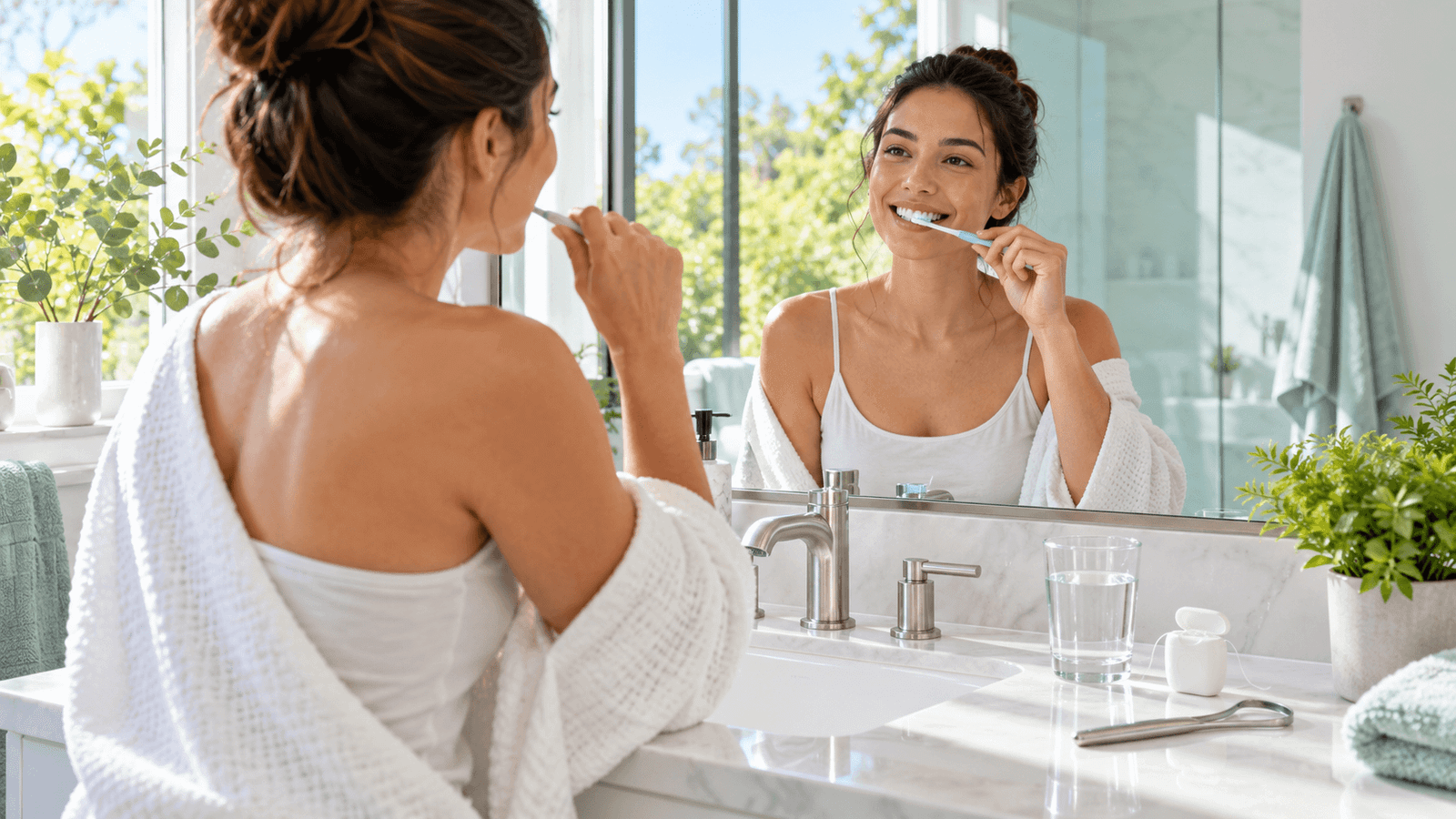
A few consistent habits address nearly every seasonal risk factor described above.
Travel, camp schedules, and late nights are the biggest disruptors of a normal oral care routine. Brushing twice daily for two minutes with a fluoride toothpaste and flossing once a day remains the foundation regardless of season; the goal in summer is simply protecting that routine from schedule chaos. Packing a compact travel kit with toothbrush, toothpaste, and floss, and keeping it visible in a bag rather than buried at the bottom, makes it much easier to keep up the habit when your days don’t follow a normal structure.
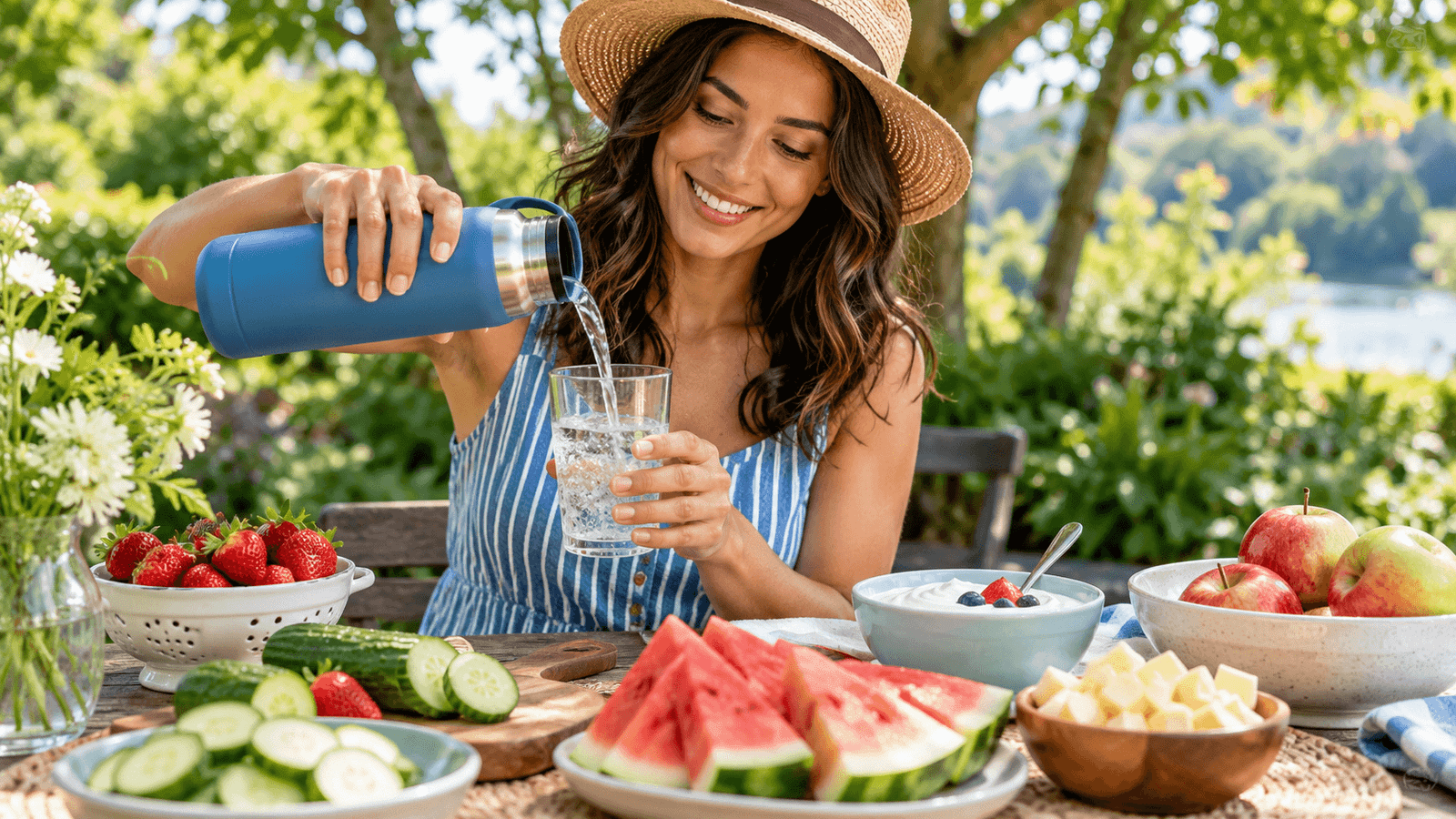
Because dehydration directly reduces the saliva that protects your teeth, staying ahead of fluid loss is one of the most effective and simplest things you can do. Water is the best choice specifically because it doesn’t introduce sugar or acid the way other drinks do. If you’re sweating heavily through exercise or extreme heat, an electrolyte drink can help, but it’s worth checking labels, since many contain as much sugar as soda; a low-sugar electrolyte option paired with water is generally the better combination.
If you spend significant time in a pool, especially a chlorinated one, rinsing your mouth with plain water afterward helps offset the pH shift that contributes to chlorine-related staining. Swimmers with a regular pool routine may also want to mention it at their next dental visit, since a professional cleaning can typically remove chlorine-related surface stains that don’t respond well to home whitening.
A lip balm containing SPF 15 or higher, reapplied every couple of hours during extended sun exposure, meaningfully reduces the cumulative UV damage that contributes to long-term lip health problems. This is a small addition to a sun care routine that’s easy to overlook when the focus is usually on skin, but it matters just as much here. If you’re already researching broader skincare choices for summer, it’s worth looking at the same ingredient quality standards for lip products that you’d apply to the rest of your routine; a rundown like this list of trusted organic skincare brands is a useful starting point for finding SPF lip balms without questionable fillers.
Sipping soda, lemonade, or a sweetened iced coffee slowly over an hour is actually worse for your teeth than drinking the same amount quickly, because it extends the time your enamel spends bathed in sugar and acid. Using a straw positioned toward the back of the mouth reduces direct contact with the front teeth, and following an acidic or sugary drink with a rinse of plain water helps neutralize the effect faster.
Beyond drinks, a few food-specific habits make a noticeable difference over the course of a season.
Fresh fruit is genuinely good for you, but the acid in citrus, berries, and pineapple can soften enamel temporarily right after eating. Rinsing with water or waiting about 30 minutes before brushing (brushing immediately after acidic food can actually brush away softened enamel before it re-hardens) protects your teeth while still letting you enjoy seasonal produce.
Ice cream and popsicles are fine in moderation, but the combination of sugar and extreme cold can be uncomfortable for anyone with existing tooth sensitivity, and the sugar itself feeds the same bacteria responsible for cavities. Eating them as part of a meal rather than as a standalone snack, similar to the holiday-treat guidance dentists give in winter, reduces how long sugar lingers on your teeth between saliva-rich meals.
If you’re also paying attention to your broader summer nutrition, calcium and vitamin D remain relevant even outside of dairy-heavy winter meals, since both support the jawbone structure that holds your teeth in place. A practical overview of which supplements are actually worth taking, and why, can help you decide whether your summer diet is covering those bases on its own.
Vacations and long trips introduce their own set of oral health risks, mostly related to broken routines and unfamiliar food and water.
Pack a dedicated travel dental kit rather than relying on hotel toiletries, which rarely include floss and sometimes skip toothpaste entirely. A travel-sized fluoride toothpaste, a toothbrush with a protective cap, and a small container of floss picks take up almost no space and remove the most common excuse for skipping oral care while away from home.
If you’re traveling to an area with unfamiliar tap water, it’s worth checking whether it’s safe to use for brushing; in regions where drinking water isn’t recommended, using bottled water for brushing as well is a reasonable precaution. Time zone changes can also disrupt when you’d normally brush, so anchoring your routine to a fixed action, like right after breakfast and right before getting into bed regardless of the local time, helps keep it consistent even when your schedule is unpredictable.
Dental emergencies while traveling are stressful, so it’s worth knowing before you leave whether your dental insurance covers out-of-network or out-of-area emergency visits, and keeping a note of your dentist’s contact information in case a remote consultation is possible for a minor issue like a lost filling or a cracked tooth.
Children’s summer schedules, camps, sports, and constant snacking, create their own oral health considerations that are worth addressing separately from adult habits.
Without the structure of a school day, kids often snack more frequently in summer, and frequent snacking, especially on sugary or starchy foods, means more frequent acid attacks on developing teeth. Keeping water as the default drink, offering fruit instead of candy where possible, and encouraging a quick water rinse after treats all help offset the increased snacking frequency without turning it into a constant battle.
Children’s lips are just as vulnerable to sun damage as adults’, and kids are often outside for longer stretches during summer break. A kid-friendly SPF lip balm, applied alongside regular sunscreen, is an easy habit to build into an existing sun protection routine.
If your child is heading to summer camp, packing a labeled toothbrush, toothpaste, and floss, along with a simple written reminder of the routine, helps maintain consistency even without a parent supervising. For younger kids, an electric toothbrush with a timer function can make the two-minute brushing habit easier to stick to in an unfamiliar setting.
Summer brings a spike in outdoor sports, from swimming and baseball to skateboarding and biking, and dental injuries are a genuine risk in nearly all of them.
A properly fitted mouthguard is the single most effective piece of equipment for preventing sports-related dental trauma, and it’s relevant for far more activities than people usually assume; not just contact sports like football or hockey, but also skateboarding, biking, and even recreational basketball, where falls and collisions are common. Custom-fitted mouthguards from a dentist offer better protection and comfort than generic boil-and-bite versions, and for kids or teens playing sports regularly through the summer, the investment is generally worthwhile.
Dehydration during intense summer activity compounds the dry-mouth risk discussed earlier, so athletes in particular benefit from pairing water intake with regular breaks, rather than relying solely on sports drinks between innings or matches.
Summer weddings, reunions, and vacations often prompt people to consider whitening treatments before a big event. A few practical points are worth knowing: over-the-counter whitening strips and professional treatments both work by temporarily increasing enamel porosity, which makes teeth more susceptible to staining from the exact foods and drinks summer is full of, coffee, red wine, berries, and tomato-based sauces, for the first 24 to 48 hours after treatment. Scheduling whitening a few days before an event, rather than the morning of, and avoiding heavily pigmented food and drink immediately afterward, produces noticeably better results.
If you already deal with tooth sensitivity, whitening in the middle of a hot, dehydrated summer can make temporary sensitivity worse; timing treatments for a well-hydrated stretch, and using a desensitizing toothpaste in the days before and after, makes the process considerably more comfortable.
Most summer oral health issues are preventable with the habits above, but a few signs warrant a dental visit rather than waiting it out. Persistent tooth sensitivity to cold that doesn’t improve within a week or two, visible cracks or chips (even painless ones), lips that don’t heal after sun exposure within several days, or a sports injury involving the mouth or teeth should all be evaluated promptly rather than monitored at home.
Routine six-month cleanings are also a good opportunity to address chlorine staining, catch early enamel erosion from acidic drinks, and get a professional read on whether your summer habits are affecting your teeth in ways that aren’t yet obvious to you. If you’re also caring for an elderly family member, heat and dehydration carry compounded risks beyond oral health alone; this seasonal health guide for elderly readers covers broader precautions worth reviewing.
Does swimming in a chlorinated pool actually damage teeth? Occasional swimming isn’t a concern, but frequent, prolonged exposure, especially for competitive swimmers, can shift pool water’s pH and lead to brownish surface staining sometimes called swimmer’s calculus. Rinsing with water after swimming and mentioning frequent pool use at dental checkups helps manage it.
Why does my mouth feel drier in summer than other seasons? Heat increases fluid loss through sweat, and many people don’t increase their water intake enough to compensate. Lower hydration means lower saliva production, which is the main driver of that dry, sticky feeling.
Is it bad to chew ice? Yes. Ice is hard enough to chip or crack teeth, sometimes without immediate pain. It’s a habit worth breaking regardless of the season, and summer’s abundance of ice makes it worth watching for specifically.
Should I brush my teeth right after eating fruit? It’s better to rinse with water or wait about 30 minutes. Citrus and other acidic fruits temporarily soften enamel, and brushing immediately can wear away that softened layer before saliva has a chance to re-harden it.
Can sunscreen habits really affect oral health? Indirectly, yes. Lips lack the natural UV protection that skin has, and repeated sun exposure without an SPF lip balm increases the risk of long-term lip damage, including precancerous changes on the lower lip.
Are sports drinks better than soda for my teeth? Not necessarily. Many sports drinks combine sugar with acidity in a way that’s particularly erosive to enamel. For most people, water is the better default, with a low-sugar electrolyte option reserved for genuinely intense exercise or heat exposure.
Is it safe to whiten my teeth in summer before an event? Yes, but timing matters. Whitening temporarily increases enamel porosity, making teeth more prone to staining from summer foods and drinks for a day or two afterward. Scheduling treatment a few days before an event, rather than the same day, gives better results.
Oral health summer tips ultimately come down to protecting the same things year-round care always protects, just against a different set of seasonal pressures: less saliva from heat and dehydration, more acid and sugar from seasonal food and drink, more sun exposure on unprotected lips, and more disruption to routine from travel and activity. None of the fixes are complicated. Staying hydrated, protecting your lips, rinsing after swimming, keeping sugary drinks from lingering, and packing a simple travel kit cover almost everything dentists see spike every summer. Building these into your existing routine, alongside the same foundational habits that matter every other season of the year, keeps your smile in good shape through the heat and the vacations alike.