

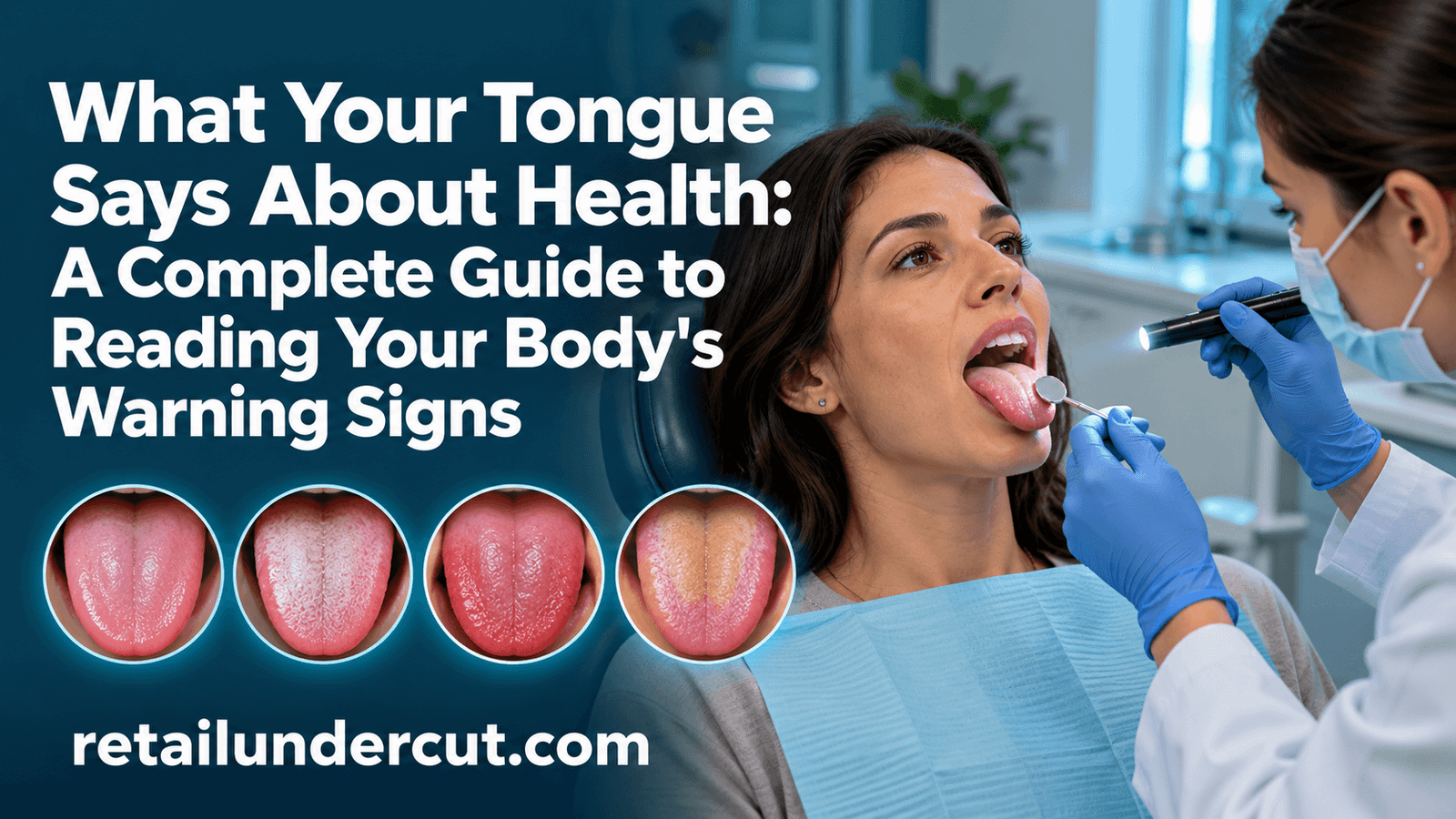
Long before blood panels and imaging scans existed, physicians relied on a much simpler diagnostic tool that was always right there in the patient’s mouth: the tongue. Doctors in ancient China, India, and Greece all built entire diagnostic systems around it, and modern medicine still hasn’t abandoned the habit. Every time a physician asks you to “stick out your tongue,” they’re doing something that has been part of medical examinations for thousands of years. So what your tongue says about health is not a folk myth — it’s a legitimate, evidence-based window into what’s happening inside your body, from hydration and nutrition to circulation and immune function.
Your tongue is covered in thousands of tiny bumps called papillae, laced with blood vessels, and in constant contact with saliva, bacteria, food, and the surface of your teeth. Because it renews its surface cells every few days, it reacts quickly to changes in your body chemistry — often faster than your skin or nails do. That makes it an unusually honest reporter. This guide walks through exactly what your tongue says about health, color by color and texture by texture, so you know which changes are harmless and which ones deserve a phone call to your doctor or dentist.
Before you can spot a problem, it helps to know the baseline. A healthy tongue is typically a medium pink-red color, moist, and covered with a thin layer of small, visible papillae that give it a slightly rough, velvety texture. There may be a very light, translucent whitish film on it, especially first thing in the morning — that’s normal and usually disappears after you eat, drink, and brush your teeth. The surface should be relatively even, without deep cracks, unusual swelling, hard lumps, or patches that look strikingly different from the rest of the tongue.
Once you know what “normal” looks like for you, it becomes much easier to notice when something changes. And that’s really the heart of what your tongue says about health — it’s less about memorizing a color chart and more about noticing shifts from your own baseline and understanding what might be driving them.
It also helps to check your tongue in good lighting, ideally in the morning before you’ve eaten, brushed, or had coffee, since food, drinks, and even toothpaste can temporarily mask or mimic changes. A quick weekly glance takes only a few seconds and, over time, teaches you what’s genuinely new versus what’s just an ordinary daily fluctuation.
Color is usually the first thing people notice, and it’s one of the most useful diagnostic clues your tongue offers. Here’s what different shades tend to indicate.
A thin white film is often nothing more than trapped debris, dead cells, and bacteria sitting on the papillae — common after sleeping, smoking, or not drinking enough water. It usually clears up with a bit of gentle tongue brushing and better hydration. A thicker, cottage-cheese-like white coating that can be scraped off, though, may point to oral thrush, a yeast infection caused by an overgrowth of Candida fungus. Thrush is more common in babies, older adults, people with weakened immune systems, and anyone who has recently taken antibiotics or uses inhaled steroids. If white patches are thick, painful, or don’t scrape off easily, they should be checked by a dentist or doctor, since persistent white patches (called leukoplakia) can occasionally be precancerous and warrant a professional look.
A tongue that turns unusually bright red, especially with enlarged, bumpy papillae that resemble the seeds on a strawberry, is one of the more attention-grabbing signs your body can send. In adults, a smooth, beefy-red tongue is classically associated with vitamin B12, folate, or iron deficiency. In children, a sudden strawberry tongue paired with a sandpaper-textured rash and fever can be a sign of scarlet fever, a bacterial infection that needs antibiotic treatment. Strawberry tongue is also one of the diagnostic features of Kawasaki disease, a rare but serious inflammatory condition in young children that requires prompt medical attention. If a red, bumpy tongue shows up alongside a rash, high fever, or swollen glands, don’t wait it out — get it evaluated the same day.
Yellowing is usually caused by a buildup of dead skin cells on the papillae, sometimes combined with bacteria, tobacco use, certain mouthwashes, or dry mouth. It looks alarming but is rarely serious, and typically responds well to gentle tongue scraping, more water, and cutting back on tobacco or coffee. In rare cases, a yellow tinge that spreads to the whites of the eyes and skin can point to jaundice from a liver issue, which is a different and more urgent picture entirely.
Black hairy tongue looks dramatic but is usually harmless. It happens when the papillae grow longer than usual and trap bacteria, food particles, and pigments from coffee, tea, tobacco, or certain mouthwashes, giving the surface a dark, fuzzy appearance. It’s linked to dry mouth, poor oral hygiene, antibiotic use, and smoking. Gentle brushing of the tongue, staying hydrated, and cutting back on the staining culprits usually resolves it within a couple of weeks.
If your tongue looks noticeably paler than the inside of your cheek, it can be a sign of anemia — a shortage of healthy red blood cells, often related to low iron, vitamin B12, or folate. Pale tongue is frequently accompanied by fatigue, dizziness, cold hands and feet, or shortness of breath, and it’s worth a simple blood test to check your levels rather than guessing.
A tongue with a purplish or bluish tint can reflect poor circulation or lower oxygen levels in the blood, sometimes related to heart or lung conditions. It can also show up after eating or drinking something with strong dye (a grape popsicle is a classic culprit), so context matters. If a bluish tongue appears alongside shortness of breath, chest discomfort, or bluish lips and fingertips, treat it as urgent and seek medical care right away.

Color isn’t the whole story — shape, texture, and surface pattern matter just as much when it comes to what your tongue says about health.
This condition earns its name from smooth, irregular red patches with slightly raised white or gray borders that shift location over time, resembling a map or landmasses on a globe. According to the Cleveland Clinic, it affects roughly 3% of people worldwide and is almost always harmless, though it can cause mild burning with spicy or acidic foods. It’s been loosely linked to psoriasis, eczema, type 1 diabetes, hormonal changes, and occasionally nutritional gaps in zinc, iron, or B vitamins, but most people never find an exact trigger and simply learn to manage the occasional sensitivity.
If the edges of your tongue show wavy, rippled indentations that look like they’ve been pressed against your teeth, you’re looking at a scalloped tongue. It usually happens because the tongue is slightly swollen or because of habitual pressing or clenching against the teeth — sometimes from anxiety, stress, TMJ tension, or nighttime teeth grinding. It’s also associated with sleep apnea, since some people unconsciously push their tongue forward to keep their airway open while sleeping, and with hypothyroidism, dehydration, or vitamin deficiencies. A scalloped tongue is rarely dangerous on its own, but it’s a helpful clue that’s worth mentioning to your doctor, particularly if you also struggle with unexplained tiredness or poor sleep quality.
Deep grooves or cracks across the surface of the tongue — sometimes called a “fissured” or “scrotal” tongue — are usually a harmless variation that becomes more common with age. In some cases, though, cracking is linked to dehydration or nutritional shortfalls, and food debris can collect in the grooves, so extra attention to gentle cleaning helps prevent irritation or bad breath.
A tongue that has lost its normal bumpy texture and looks unusually smooth and shiny (sometimes called “bald tongue”) often signals that the papillae have flattened out, which is frequently tied to vitamin B12, iron, or niacin deficiency. It can also appear with dry mouth or after certain infections. Because this sign so reliably points back to nutrition, it’s one of the clearest places where what your tongue says about health overlaps directly with what’s on your plate.
A tongue that suddenly feels too big for your mouth can be caused by an allergic reaction, an infection, a nutritional deficiency, or — more rarely — a thyroid disorder or amyloidosis. If swelling comes on quickly and is paired with difficulty breathing or swallowing, hives, or facial swelling, that’s a medical emergency (possible anaphylaxis) and requires immediate care.
The thickness of your tongue’s natural coating can shift with hydration, diet, and even how well your digestive system is working. A very thick, heavy coating is often linked to dehydration, mouth breathing, a diet high in soft or processed foods, or simply not cleaning the tongue during brushing. On the other hand, a coating that disappears entirely, leaving the tongue looking unusually smooth and “bald,” more often points toward a nutritional gap than a digestive one. Neither extreme is an emergency, but both are useful nudges to drink more water, chew more fibrous foods, and add tongue cleaning to your daily routine.
Not every signal your tongue sends is about color or shape — sometimes it’s about sensation. A persistent burning feeling on the tongue, without any visible cause, is known as burning mouth syndrome, and it’s often connected to hormonal changes, nerve issues, dry mouth, acid reflux, or high stress and anxiety levels. If you’ve noticed your mouth feels raw or burning during particularly stressful stretches, it’s worth looking at your overall stress load alongside any oral symptoms — our guide to protecting your mood and managing stress covers habits that can ease tension-related physical symptoms, tongue discomfort included.
Small, painful ulcers (canker sores) are usually harmless and heal within one to two weeks, often triggered by minor injury, acidic foods, or stress. Recurring or unusually large sores, however, can be linked to conditions like Crohn’s disease or a weakened immune system. As the Stanford Medicine 25 physical exam guide notes, clinicians are specifically trained to check for this. The one rule that matters most here: any sore, lump, red or white patch, or area of pain that doesn’t heal within two to three weeks — particularly if you smoke, drink heavily, or use tobacco products — needs to be examined by a doctor or dentist to rule out oral cancer. Early detection makes an enormous difference in outcomes, so this is not a symptom to sit on.
People living with diabetes often notice tongue and mouth changes before they notice anything else, which is part of why dentists sometimes catch early signs of blood sugar problems before a doctor does. High blood sugar can reduce saliva production, leading to a persistently dry mouth that makes the tongue feel rough, cracked, or coated. That same dryness creates the perfect environment for Candida yeast to thrive, which is why oral thrush and a thick white coating show up more frequently in people with poorly controlled diabetes. Burning mouth syndrome is also more common among diabetics, often linked to nerve changes (neuropathy) caused by long-term high blood sugar. If you already manage diabetes and notice new tongue soreness, dryness, or a metallic taste that won’t go away, it’s worth flagging at your next appointment rather than dismissing it as a minor annoyance — in this case, what your tongue says about health can double as an early warning system for how well your blood sugar is actually being managed day to day.
Long before modern dentistry, Traditional Chinese Medicine (TCM) practitioners developed an entire diagnostic art around tongue observation, examining its color, shape, coating, moisture, and even the texture in specific zones believed to correspond to different organs. A pale tongue was thought to reflect weak “qi” or blood, a red tip was linked to heart imbalance or stress, and a thick, greasy coating was read as a sign of digestive stagnation. While TCM tongue diagnosis isn’t a replacement for modern lab work, it’s a striking example of how many different medical traditions independently arrived at the same conclusion: the tongue is a mirror of internal health. If this kind of holistic, whole-body approach interests you, our piece on seasonal wellness through a Traditional Chinese Medicine lens goes deeper into how these principles are applied in everyday life.

Most tongue changes are minor and resolve on their own within a week or two. But it’s worth booking an appointment if you notice any of the following: a patch, lump, or sore that doesn’t heal within two to three weeks; sudden or severe swelling, especially with trouble breathing or swallowing; persistent pain or burning with no obvious cause; a red, bumpy “strawberry” tongue alongside fever or rash; unexplained numbness or difficulty moving the tongue; or color changes (very pale, very red, purple, or yellow) that don’t improve with hydration and basic hygiene. When in doubt, a quick visit to your dentist or primary care provider is far cheaper — in time, money, and peace of mind — than letting a symptom linger.
Because so much of what your tongue says about health comes down to hydration, hygiene, and nutrition, the fixes are often refreshingly simple.
Start by adding tongue cleaning to your daily brushing routine, either with your toothbrush or a dedicated tongue scraper, to clear away the bacteria and debris that cause coating, odor, and discoloration. Drink enough water throughout the day, since a dry mouth changes both the color and texture of the tongue’s surface. Eat a varied diet rich in iron, B vitamins, and folate — leafy greens, eggs, lean meats, and fortified cereals all help prevent the deficiencies that show up as pale, smooth, or “strawberry” tongues; if you’re unsure whether you’re getting enough from food alone, our breakdown of supplements that are actually worth taking is a good place to check before reaching for a bottle. Cut back on tobacco and limit alcohol, both of which are strongly linked to discoloration, dryness, and higher oral cancer risk. And don’t skip your regular dental checkups — a dentist often spots early tongue and mouth changes before you do.
Seasonal habits matter too. Dry winter air and hot summer dehydration each affect the mouth differently, so it’s worth reading our seasonal guides on protecting your teeth and gums in summer and keeping your mouth healthy through winter for habits tailored to the season you’re in right now. And if you want to zoom out from oral health to your overall wellness routine, our complete, evidence-based guide to feeling your best ties nutrition, sleep, and preventive care together in one place.
Yes. Stress and anxiety can contribute to teeth clenching and tongue pressing (leading to a scalloped tongue), dry mouth, and burning mouth syndrome, all of which alter how the tongue looks and feels.
Not always. A light white film is often just trapped debris and is easily cleared with brushing, but a thick, cottage-cheese-like coating that won’t scrape off can indicate a yeast infection called oral thrush and deserves a professional look.
Usually not. Foods and drinks with strong dyes — like berries, popsicles, or certain candies — can temporarily stain the tongue. If the color doesn’t fade within a day after normal eating and brushing, it’s worth a closer look.
Once or twice a day, alongside brushing your teeth, is generally enough. Gentle scraping from back to front removes bacteria and debris without irritating the surface.
Often, yes. A pale, smooth, or unusually red tongue can be one of the earliest visible signs of low B12, iron, or folate, sometimes showing up before fatigue or other symptoms become obvious.
Your tongue can’t talk, but it communicates constantly — through color, texture, coating, and sensation — and learning to read those signals is one of the simplest, most accessible ways to keep tabs on your health. Most of what your tongue says about health points to everyday, fixable causes like dehydration, mild irritation, or a gap in your diet. But because the tongue can also be one of the earliest visible signs of anemia, vitamin deficiency, infection, or even more serious conditions, it’s worth a genuine glance in the mirror every so often. If something looks different and doesn’t resolve within a couple of weeks, don’t guess — let a dentist or doctor take a look. It’s a small habit that can catch a health issue while it’s still easy to treat, and it costs nothing but a few seconds and a mirror. Pair that habit with good hydration, a balanced diet, and regular dental visits, and you’ll have covered most of the bases that keep your tongue — and the rest of you — in good shape for the long run.