

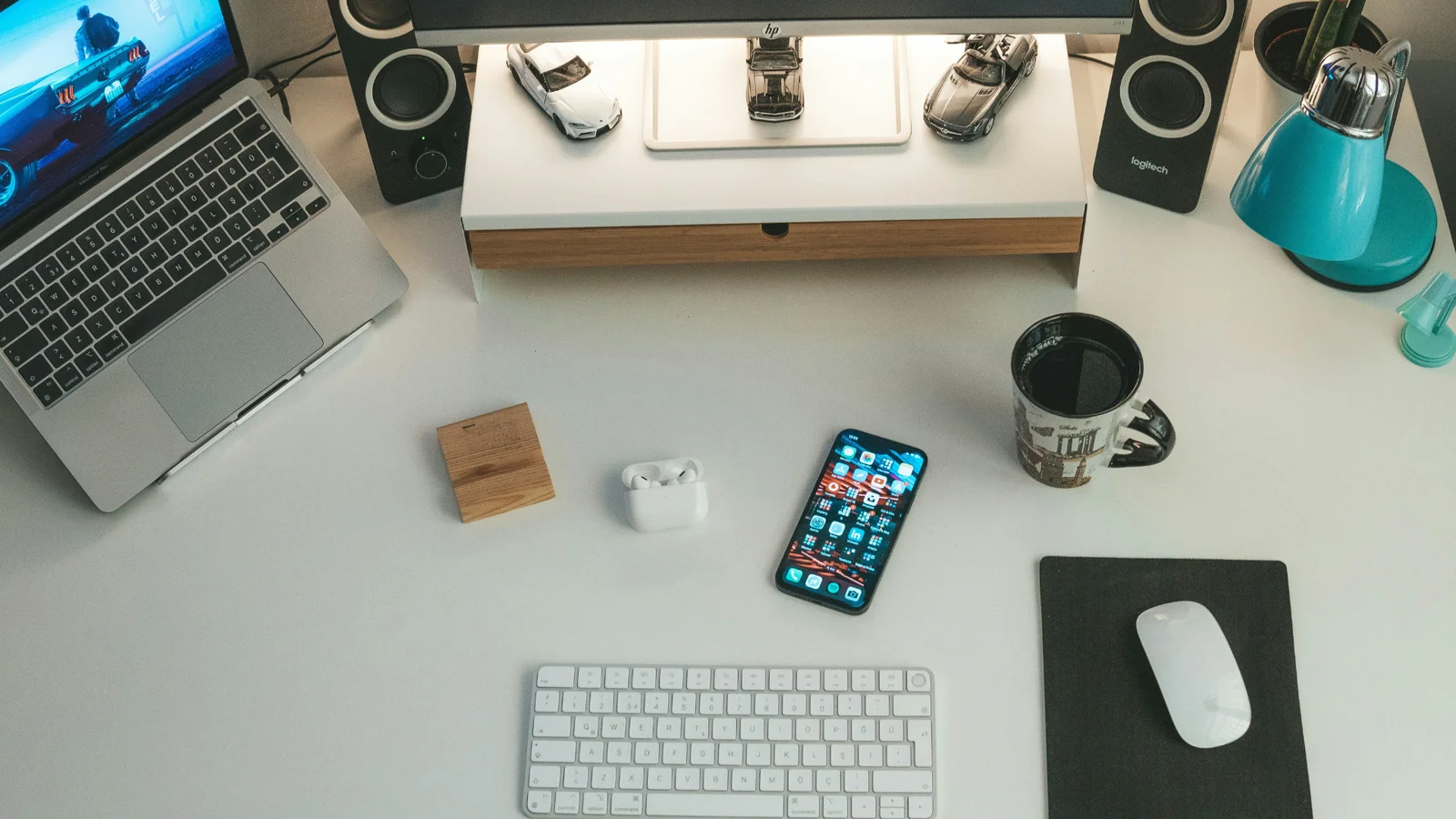
Remote work has permanently reshaped how millions of Americans earn a living. What started as a temporary response to a global disruption has evolved into a permanent lifestyle choice for a growing portion of the US workforce — and in 2026, working remotely is no longer a perk. For many people, it is simply how work gets done.
But here is something that took most remote workers at least a few months to figure out on their own — your home office setup determines the quality of your work far more than most people expect. The right accessories mean more focus, less physical strain, better communication with your team, and a professional image on every video call. The wrong setup — or worse, no intentional setup at all — means back pain by noon, video calls where you look like you are sitting in a cave, and hours of lost productivity to frustration and discomfort.
This guide covers every essential tech accessory remote workers need in 2026. Whether you are newly remote, upgrading a setup you threw together quickly, or building your ideal home office from scratch, every item on this list will make a measurable difference in how you work, how you feel, and how you are perceived by colleagues and clients.
Most people underestimate how much their physical workspace affects their performance. In a traditional office, your employer invests in ergonomic furniture, reliable technology, fast internet, and professional communication equipment because these things directly impact productivity and output quality.
When you work remotely, that investment responsibility shifts to you. And while it can feel uncomfortable to spend money on your workspace, the math is straightforward — a remote worker who is 15 percent more productive because of a better setup earns significantly more per hour of effort than one who is constantly fighting slow equipment, physical discomfort, and poor communication tools.
Think of your home office accessories as the tools of your trade. A carpenter does not hesitate to invest in quality tools. A chef does not skimp on good knives. Remote workers who take their careers seriously treat their tech accessories the same way — as essential equipment that directly enables better work.
The items in this guide are organized by category, from the most foundational and universal to the more specialized needs of specific types of remote workers. Start with the essentials that apply to everyone and build from there.
What you see while you work has a profound impact on how efficiently you work. Screen real estate, display quality, and ergonomic positioning are all factors that affect both productivity and physical health over the course of a full workday.
If you work on a laptop and have not yet added an external monitor to your setup, this is the single highest-impact upgrade you can make to your remote work experience. Research consistently shows that adding a second screen increases productivity by 20 to 30 percent for knowledge workers — because the ability to have reference material, communication tools, or secondary applications visible simultaneously eliminates the constant context-switching of a single-screen workflow.
A 27-inch monitor hits the sweet spot for most remote workers — large enough to display multiple windows comfortably side by side, without requiring you to turn your head significantly to see either side of the screen. For writers, designers, developers, and anyone who works with documents and communication simultaneously, a monitor in this size range is transformative.
When choosing a monitor, prioritize resolution over size. A 27-inch 4K display at 60Hz delivers a sharper, more comfortable visual experience than a larger 1080p screen. For remote workers who spend long hours in front of screens, IPS or OLED panel technology offers wider color accuracy and better viewing angles than cheaper TN panels, which reduces eye strain over extended working sessions.
USB-C connectivity is worth prioritizing if your laptop supports it — a single USB-C cable that simultaneously transmits video, charges your laptop, and connects USB peripherals simplifies your desk dramatically and eliminates cable clutter.
A monitor arm is one of those accessories that seems unnecessary until you use one, at which point it becomes completely indispensable. A quality monitor arm mounts to the back of your desk and holds your monitor at the exact height, angle, and distance that is ergonomically correct for your body — something that the standard monitor stand that comes in the box almost never achieves.
The correct monitor position places the top of the screen at or slightly below eye level, with the screen approximately an arm’s length away. When your monitor is too low — as it typically is on a standard stand — you spend your entire workday looking slightly downward, which creates chronic neck strain that accumulates into real pain over weeks and months.
A monitor arm also frees up the desk space that the standard monitor base occupies, which is more significant than it sounds — that reclaimed area is exactly where you want a notebook, a webcam, or simply the clean open space that makes a desk feel organized and calm.
Audio quality is one of the most underappreciated aspects of remote work. Whether you are on a team standup, a client presentation, or a one-on-one with your manager, how clearly you can hear and be heard directly affects the quality of every conversation.
Noise-canceling headphones are arguably the most universally valuable tech accessory for remote workers. They serve two equally important purposes — blocking environmental noise so you can focus deeply on your work, and delivering clear audio during calls so you can hear colleagues without straining.
Active noise cancellation technology works by using microphones to detect ambient sound and generating opposing sound waves to neutralize it. The result is a dramatic reduction in background noise — traffic, neighbors, household sounds, coffee shop chatter — that would otherwise constantly fragment your concentration.
For remote workers who take frequent video calls, over-ear headphones with ANC deliver the most immersive isolation, while the built-in microphones on premium models are typically clear enough for professional calls. For those who prefer a less fatiguing fit during long work sessions, high-quality earbuds with ANC offer excellent noise isolation in a significantly more lightweight form factor.
Battery life matters significantly for remote workers. Look for headphones offering at least 20 to 30 hours of ANC playback on a single charge — running out of battery midway through a long work session is a frustration that premium models eliminate entirely.
The built-in microphone in your laptop is one of the weakest links in any remote work setup. It is positioned to capture sound from a wide area — picking up keyboard clicks, room echo, and environmental noise along with your voice — and it compresses audio in ways that make you sound distant and unclear on calls.
A dedicated USB microphone positioned 6 to 12 inches from your face captures your voice with dramatically more clarity and warmth, making you sound professional and present on every call. For remote workers who frequently lead meetings, present to clients, or create any kind of recorded content, the difference a good microphone makes is immediately apparent to everyone listening.
Cardioid condenser microphones are the most popular choice for remote workers — they capture sound primarily from the front while rejecting noise from the sides and rear, which means less room echo and background noise in your recordings and calls. A simple pop filter and a small desktop mic stand complete the setup without adding significant bulk or complexity.
A monitor and good audio setup only solve part of the remote work comfort equation. The chair you sit in for eight or more hours a day has an outsized impact on posture, back health, and overall energy levels compared to almost any other single piece of equipment. Our guide on ergonomic mesh office chairs for remote workers covers budget-friendly options that provide meaningfully better lumbar support and breathability than a generic dining or gaming chair repurposed for work.
Poor lighting is one of the most common and easiest-to-fix issues on video calls. Positioning your primary light source in front of you rather than behind avoids the silhouette effect that overhead or backlit rooms create, and a simple ring light or desk lamp with adjustable color temperature makes a noticeable difference in how professional you appear on camera. Beyond video calls, good lighting also reduces eye strain during long work sessions, which affects focus and fatigue over the course of a full day.
Standard laptop keyboards and trackpads aren’t designed for extended daily use, and switching to a separate ergonomic keyboard and mouse reduces the wrist and hand strain that builds up over months of remote work. Split or curved keyboards in particular help maintain a more natural wrist angle, while a vertical or ergonomically shaped mouse reduces the repetitive strain associated with standard mouse designs. This is a relatively low-cost upgrade that pays off significantly for anyone doing extensive typing or design work throughout the day.
As remote work setups grow to include monitors, lights, microphones, and multiple chargers, cable clutter becomes both a visual and practical problem. Basic cable clips, a under-desk cable tray, and a labeled power strip keep a growing collection of cords organized and prevent the frustration of untangling cables every time you need to move or clean your workspace. This is a small investment that meaningfully improves the daily experience of using an increasingly complex desk setup.
A stable internet connection is non-negotiable for remote work, and having a backup plan for outages protects you from missing important meetings or deadlines. A mobile hotspot through your phone plan, or a dedicated backup hotspot device, provides a fallback if your primary connection goes down. A basic battery backup or surge protector for your computer and monitor setup similarly protects against power fluctuations and gives you a few extra minutes to save work and shut down safely during a power outage.
Not everyone working remotely has a dedicated home office, and a workspace that needs to be set up and broken down daily benefits from different accessories than a permanent one. A laptop stand and portable monitor that fold away easily, along with a rolling cart or storage bin for peripherals, make it realistic to maintain an ergonomic setup even in a shared or multi-purpose room. Prioritizing lightweight, quickly stowable versions of the accessories covered in this guide is worth it if your workspace needs to double as a dining table or living room by evening.
Beyond physical hardware, tools that encourage regular breaks and protect focus time meaningfully affect both productivity and long-term health for remote workers who might otherwise sit for hours without moving. Simple break reminder apps, along with a standing desk converter if a full standing desk isn’t practical, help build movement into a workday that otherwise has none of the natural walking and standing that an office environment provides.
None of these upgrades need to happen all at once. Prioritizing based on what causes the most daily discomfort, often the chair or the lack of an external monitor, and adding accessories gradually as budget allows is a more sustainable approach than trying to build a complete setup in a single purchase. Our roundup of tech gadgets under $100 covers several budget-friendly options worth considering as you build out your setup piece by piece.
Remote work accessories follow the same seasonal discount patterns as other tech gear. Our thrifty sales guide is worth checking regularly before committing to full retail pricing on any single accessory covered in this guide.
A well-equipped remote workspace protects both your productivity and your physical health over the long run, and the right accessories make the difference between a setup that feels improvised and one that feels genuinely professional. Browse our full technology category on Retail Under Cut for more remote work and productivity guides.


Don’t miss a thing! Sign up to get new content sent directly to your inbox.