

There is something quietly magical about vintage Halloween decor. The slightly faded orange, the grinning cardboard pumpkins, the black cats with arched backs and the glow of an old plastic jack-o’-lantern all feel like a memory, even if you did not grow up with them. It is also a look that is friendly to your wallet, because the whole point is charm and character rather than the latest expensive prop.
This guide explains what counts as vintage Halloween decor, how to spot the real thing, where to find it, how to care for fragile pieces and how to get the same look with budget-friendly and homemade alternatives. Halloween 2026 lands on Saturday, October 31, so there is still time to collect a few pieces and put together a display you will be proud of.
Strictly speaking, “vintage” refers to items that are decades old, while “antique” usually means a hundred years or more. In the world of Halloween collecting, the word is used loosely to describe a range of styles that share a nostalgic feel. You will typically see three broad groups.
Alongside these, many people also count retro-inspired reproductions as part of the look. Both the genuine article and modern lookalikes are perfectly good ways to decorate. The important thing is to be clear about what you are buying.
Vintage decor is instantly recognizable, and it is easier to imitate than you might think once you know the ingredients.
Classic palettes lean on orange and black, softened by warm cream, mustard yellow and a muted green or teal. The colors are less saturated than modern neon shades, which gives them a gentle, aged appearance. If you are mixing old and new, a limited palette will pull everything together.
Look for jack-o’-lanterns with toothy grins, black cats, witches on broomsticks, owls, bats, crescent moons, skeletons with jointed limbs and spooky trees. Faces are often more whimsical than frightening, which is part of the appeal and makes this style family-friendly.
Paper, cardboard, papier-mâché, tin, glass and early plastics give vintage decor its handmade, tactile feel. Even if you buy modern items, choosing matte finishes and natural materials makes them feel closer to the real thing.
Reproductions are not a problem, but it helps to know what you are paying for, especially if a seller claims something is old.
If you simply love the look, do not worry too much about authenticity. Buy what you enjoy and what suits your budget.
Thrift stores are the cheapest source and can be surprisingly good in early autumn, when donors clear out storage. Go often, look in the seasonal aisle and the general housewares shelves, and be prepared to dig.
These are excellent for finding boxes of old holiday items. Ask if there are any Halloween decorations, because sellers do not always put them out at the start.
Dealers who specialize in holiday collectibles can be pricier, but the selection is broader and the items are usually cleaned and labeled. It is also an opportunity to learn from people who know what they have.
Online listings reach the widest range of items, but you cannot inspect the piece in person. Read descriptions carefully, look at photos from multiple angles, check the seller’s ratings and factor in shipping and return terms. Fragile items can be damaged in transit, so check how they will be packed. For general tips on comparing where to shop, see our guide to online shopping deal sites.
Do not overlook people you know. An older relative may have a box of decorations they no longer use and would be glad to see them displayed.
Prices vary widely depending on rarity, condition and demand, and we cannot give reliable figures because they change constantly. Instead of chasing bargains, think about how you want to use the piece. If you are decorating for enjoyment, a little wear is part of the charm and lowers the cost. If you are collecting for value, condition and originality matter much more, and it is worth learning what similar items have sold for before you spend a lot.
Before you buy, look for cracks, missing parts, fading, water damage and signs of repair. For lit items, ask whether the wiring is intact and safe to use. It is usually best to replace or rewire old electrical components rather than plug in something that has not been checked.
Your entrance is a great place to show off the look. A glowing pumpkin, a stack of hay bales and a paper garland create an inviting scene. For specific ideas for the entrance itself, see our guide to Halloween door decorations.
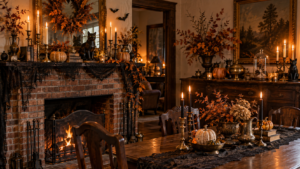
Line up small pieces along a mantel with a garland and some candles (use flameless ones for safety). Group items in odd numbers and vary heights so the display feels layered.
A vintage-style table setting with cardboard place cards, small pumpkins and a simple orange and black runner suits a family dinner or party. If you are hosting, our Halloween party themes include a retro option that pairs well with this look.
Paper silhouettes taped to windows are cheap, look great from the street and are easy to remove afterwards. Cats, bats and witches are the classic choices.
A retro candy bowl or a small papier-mâché pumpkin makes a charming holder. If you are choosing what to put in it, our list of the best Halloween candy is a good place to start.
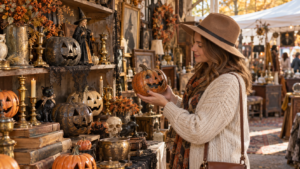
You do not need to own genuine antiques to capture the feeling. Try these approaches.
If you go to the trouble of collecting vintage pieces, protect them so they last.
You do not have to choose one style. A few vintage pieces can sit comfortably with contemporary items if you connect them with a common color or theme. Use vintage items as focal points, such as a single large blow-mold pumpkin on the porch, and support them with simple modern elements like plain pumpkins and black candles. Keep the number of styles limited so the space does not look cluttered.
Once you start browsing, you will notice sellers using a specific vocabulary. Knowing the terms makes it easier to search, compare and avoid disappointment.
When a listing uses one of these words, look at the photos to confirm it matches the description, because sellers sometimes use them loosely.
A vintage theme does not have to stop at the porch. Spreading pieces through the house makes the season feel more immersive without requiring a big investment.
Set a small table with a paper garland, a single glowing pumpkin and a bowl for keys or candy. Because guests see this space first, it is worth keeping it tidy with one clear focal point.
Choose a shelf or mantel and treat it like a mini gallery. Use frames for printed vintage-style art, and place small figures in front. Warm lamps instead of overhead lights will make the room feel cozier.
A few dish towels, a cake stand with cookies and a retro-style tin can change the mood. Since kitchens get messy, keep delicate items out of the splash zone and use washable materials.
Stick to gentle, friendly motifs, such as smiling pumpkins and cartoonish ghosts. Avoid anything with small removable parts in a young child’s room, and use battery LED lights instead of anything that gets hot.
This project takes about an hour, costs very little and gives you a decoration you can reuse for years if you store it carefully.
If you get hooked, treat collecting as a long-term hobby rather than a one-season rush. Pick a focus, such as black cats, pumpkins or paper honeycomb pieces, since a themed collection looks more curated than a random assortment. Keep a simple notebook or spreadsheet with what you own, where it came from, what you paid and the condition. This makes it easy to see what you have, avoid duplicates and decide what to buy next. Visit the same markets and shops regularly, because inventory changes often, and get to know the regular sellers, who may tip you off when something suits your taste.
Above all, buy things you love. Trends and values shift, but a piece that makes you smile every October is always worth having.
Generally, it means decorations made decades ago, including paper die-cuts, papier-mâché candy containers and mid-century plastic pieces. Many people also use the term for retro-style modern items.
It can be, especially for rare or well-preserved items. However, thrift stores, garage sales and DIY versions offer plenty of inexpensive ways to get the look.
Look at the material, wear, construction and any maker’s marks, and compare with trusted references. If a seller makes a claim you cannot verify, ask for more detail.
Some items, such as blow molds, are designed for outdoor use. Delicate items like paper and papier-mâché should stay inside and away from moisture.
Keep them dry, cool and out of direct sunlight. Wrap fragile items in acid-free tissue and store them in sturdy boxes in a climate-controlled part of your home.
Orange and black are the foundation, softened with cream, mustard, teal or muted green. The colors tend to be less bright than modern neon shades.
Cut your own paper decorations, tea-stain paper, paint thrifted items and use warm lighting. Add just one or two authentic pieces for a focal point.
Vintage Halloween decor is about warmth, whimsy and a little bit of history. Whether you find a real mid-century pumpkin at a flea market or cut a paper black cat at your kitchen table, the result is a display with personality that stands out from mass-produced decorations. Start small, learn as you go, protect what you buy and enjoy the hunt.
For more ideas to complete your setup, explore our Halloween collection, and if you are also planning costumes, our family Halloween costume ideas pair nicely with a vintage-themed home.