Picking one costume is easy. Picking four or five that work together, fit different ages, survive a night of trick-or-treating and do not blow the budget is a different challenge entirely. If you are searching for family Halloween costume ideas right now, you are probably juggling opinions from a toddler who wants to be a dinosaur, a teenager who wants to look effortless and a parent who would like the whole thing to be finished by Friday.
This guide is built for that reality. Instead of a random list, we group ideas by family size, explain how to make coordinated costumes without spending a fortune, and cover the practical details that decide whether a night out goes smoothly: comfort, visibility, weather and sizing. Halloween 2026 lands on a Saturday, so there is a full evening to enjoy, and a little planning now makes it a lot more fun.
How to Choose a Family Costume Theme
Before you scroll through ideas, decide how your family works best. Three questions narrow the field quickly.
- How much do you want to spend? Some themes need only clothes you already own, while others require full costume sets.
- How much do you want to match? Fully matching costumes look great in photos, but coordinated ones, where each person has a different role in the same story, are easier to fit to different ages.
- Who has strong opinions? A costume that a child refuses to wear will not survive the first ten minutes. Give everyone a say early.
A useful rule is to pick the theme together, then let each person choose their own role within it. Buy-in matters more than perfection.
Three Styles of Family Costumes
Matching Costumes
Everyone dresses as the same character or object, such as a group of ghosts, skeletons or pumpkins. This is the simplest option to plan and often the cheapest, because you can shop for one look in multiple sizes. The downside is that some age groups, especially teens and toddlers, may resist looking identical.
Coordinated Costumes
Each person plays a different character from the same story or world, such as a farm, a circus or a superhero team. This suits families with a wide age range, because you can choose complexity by person.
Punny or Concept Costumes
These rely on a joke or visual play, such as a family of “pieces of a pizza” or a “seasons of the year” set. They tend to be inexpensive and memorable, and they let older kids and adults show a sense of humor.
Family Halloween Costume Ideas for Three
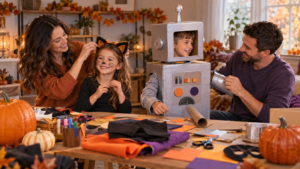
Three-person families can lean into the classic trio format, which is easy to find in stories and popular culture.
- Three witches. Black dresses or tunics, pointed hats and a cauldron bag for candy. It works for any age and gender, and the hats are the only thing you may need to buy.
- A rock band. Guitars can be made from cardboard, and you can use everyday jeans, band tees and sunglasses. It is comfortable for older kids and looks fun in photos.
- A traffic light. One person in red, one in yellow, one in green. Simple clothing in solid colors, plus circle cutouts on the chest, makes this an almost-free option.
- Scientist, robot and alien. A lab coat, foil accessories and green face paint or antennae are easy to gather, and each role gives kids room to be creative.
- Peanut butter, jelly and bread. This one appeals to young kids and requires only felt, cardboard or colored shirts.
Family Halloween Costume Ideas for Four
Four gives you enough people for a set with clear roles, such as two parents and two children, without the logistics of a big group.
- Space crew. Captain, engineer, robot and alien. Use jumpsuits or matching tops, silver accessories and inexpensive helmets or headbands.
- Camping trip. A tent, a campfire, a park ranger and a bear. It is playful, and the tent and campfire can be made from cardboard or fabric.
- A family of skeletons. Black clothing with white bones drawn or taped on. It is a classic and easy to scale by age.
- Ghostbuster-style team. Jumpsuits, homemade pack props and ghost sidekicks. If you go this way, avoid props that are heavy or hard to carry.
- Pirate crew. A captain, a first mate, a parrot and a treasure chest. Bandanas, striped shirts and boots you already own get you most of the way there.
- A cereal box and its ingredients. Choose a breakfast concept and print simple labels. It is quick, funny and forgiving on fit.
Family Halloween Costume Ideas for Five or More
Bigger groups can create a visual impact that smaller ones cannot, which is why matching or story-based sets work well here.
- A crayon box. Everyone wears a different color, plus a pointed hat made from paper. It scales to any size group.
- A carnival. A ringmaster, a strongman, a clown, an acrobat and an animal act. This is a good way to use varied ages, as each role needs a different level of effort.
- Woodland creatures. Foxes, owls, deer and rabbits. Neutral clothing with ears and tails is comfortable and inexpensive.
- Haunted house residents. A butler, a ghost, a vampire, a witch and a mummy. It is spooky but family-friendly.
- Sports team. Team shirts you already own, plus a mascot and a coach. This is helpful if you want comfortable clothes for a long night.
- A garden. Flowers, a gardener, a bee, a butterfly and a scarecrow. It is colorful and easy to put together from craft supplies.
Costumes for Babies and Toddlers That Fit the Family Theme
Little ones are the most important people to plan for, because comfort decides everything. A costume that itches, restricts movement or covers the face can lead to a short night.
- Choose soft fabrics. Fleece and cotton are easier to wear than stiff synthetic materials.
- Avoid masks for small children. Masks can limit breathing and vision. Face paint or a hat is a safer alternative, as long as the skin is not sensitive.
- Plan for diaper access. If you have a baby, pick something that lets you change them without removing the whole outfit.
- Layer underneath. A long-sleeve base layer gives warmth without altering the look.
- Use the stroller. A wagon or stroller can become part of the costume, such as a pumpkin patch cart, a spaceship or a pirate ship.
If you have a baby, a family theme that treats them as the “star” tends to work best, for example a family of astronauts with a baby as the moon or a farm with the baby as the pumpkin.
Ideas for Families With Teens
Teenagers sometimes push back on group costumes, and that is normal. Give them options that feel less childish.
- Let them pick a role. Offering the “cool” role, such as the villain or the band’s lead singer, often works.
- Keep the costume clothing-based. Jeans, a jacket and one recognizable accessory feel more casual than a full costume.
- Consider a clever concept. A pun or a pop culture reference feels more grown-up than a cartoon animal.
- Do not force it. If they would rather sit out the family photo, a small nod, such as a themed hat, can be a compromise.
Adding Pets to the Costume
Many families include pets, and it can be great fun if the animal is comfortable. Keep it simple: a bandana or a small hat is usually better than a full outfit. Watch for signs of stress, such as pulling at the costume, hiding or pacing, and take it off if your pet is unhappy. Never use costumes that restrict movement, breathing or vision, and keep candy, especially chocolate, well out of reach. If a full costume is not right for your pet, they can simply be the “sidekick” without one.
Family Costumes Using Things You Already Own
A big part of saving money is starting from your own wardrobe. Here are combinations that rely mostly on everyday clothes.
- Lumberjacks. Flannel shirts, jeans, boots and a cardboard axe.
- Cowboys and cowgirls. Denim, boots, hats and bandanas.
- Decade day. Choose a decade, such as the eighties, and let everyone dress accordingly using colors, headbands and leg warmers.
- Doctors and patients. Scrubs or white shirts, plus bandages and stuffed animals.
- Bakers. Aprons, chef hats and oven mitts, plus a tray of cookie cutouts.
- Explorers. Khaki clothes, binoculars and a paper map.
If you need a few missing pieces, look at secondhand stores, borrow from friends or watch for discounts. Our guides to sustainable fashion on a budget and fashion brands with regular discounts can help you fill the gaps without overspending.
Budget Planning for Family Costumes
Costs add up quickly when you multiply by the number of family members. A little structure keeps things under control.
- Set a total, not a per-person price. This gives you flexibility to spend more on one costume and less on another.
- List what you already have. Go through closets and storage before shopping.
- Prioritize the hard-to-make items. Masks, wigs and special props are worth buying. Simple clothing pieces are not.
- Compare retailers. Prices vary, so check a few stores before buying. Our shopping deal websites guide is a good starting point, and our Spirit Halloween savings guide explains how to approach a big seasonal retailer.
- Consider reuse. A costume that can be worn again, or passed to a sibling or friend, is better value.
Comfort and Safety Details That Matter
A family costume should work in the real world, not just in photos. These points make a difference on the night.
- Be visible. Dark costumes are hard to see after sunset. Add reflective tape, glow sticks or a small flashlight so drivers can spot children.
- Check the fit. Long hems can cause trips and falls, so hem or pin them.
- Use flame-resistant fabrics where possible. Look at costume labels, and keep costumes away from candles and open flames, including lit jack-o’-lanterns.
- Test face paint. Try a small patch on the skin first, and choose products labeled for skin use.
- Plan for weather. Depending on where you live, October nights can be cold or wet. Design costumes that can go over warm layers, or choose a theme that suits a jacket.
- Keep hands free. Props that need holding can get in the way of candy collecting, so consider attaching them to a belt or bag.
- Bring comfortable shoes. A long walk in ill-fitting boots ruins the night.
To plan the timing of the evening, see our guide to what time trick-or-treating usually happens.
Photo Tips for the Family Costume
You will probably want a good picture, so it helps to plan a little. Take photos before you head out, while everyone is fresh and the costumes are intact. Choose a spot with good light, such as a porch or a window, and use a simple background. If you have a decorated entrance, like the ideas in our Halloween door decorations guide, it makes an ideal backdrop. Take a few shots quickly, and then let the kids get moving.
Common Mistakes to Avoid
- Leaving it until the last minute. Popular costume items and sizes sell out.
- Choosing style over comfort. If a child is uncomfortable, the night is short.
- Ignoring the weather. Cold or rain can ruin a costume that cannot fit over a coat.
- Buying full sets when a few pieces would do. Mix store-bought accessories with clothes you own.
- Not testing costumes early. Try everything on a week ahead so you have time to fix issues.
- Forgetting about the bathroom. Complicated one-piece costumes are hard for kids and adults alike when they need a break.
- Overlooking allergies. Check materials and face paint for anyone with sensitivities.
Building Out the Rest of the Night
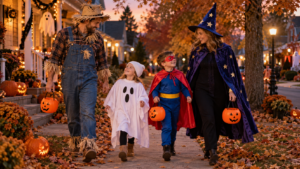
A great costume is only part of the evening. Once the outfits are ready, think about how the rest of the night will run. Decide on a route, an approximate time to head home and how you will manage candy. If you host something at home first, our Halloween party themes can help you pick a coordinated look, and our guide to the best Halloween candy is handy for stocking your bowl. If you are still stuck on the idea itself, what should I be for Halloween walks through a decision process that also works for groups.
Story-Based Themes That Work for Every Age
If your family enjoys a particular story, movie or book, that world can become a ready-made costume plan. The advantage of a story-based theme is that every family member gets a role that already has a personality, which makes it easier for children to act the part and for adults to commit. Think about the characters people already recognize: a fairy tale with a wolf, a grandmother and a woodcutter; a favorite animated film with a hero, a sidekick and a villain; or a classic adventure with a captain, a crew and a creature. You do not need licensed, store-bought outfits for any of these. Simple clothing in the right colors, plus one recognizable accessory per person, is enough for people to guess who you are.
When you choose a story, check that there are enough roles for everyone, including parts that are easy for younger children. A hero who needs a complicated prop is a poor fit for a toddler, while a “sidekick” who only needs ears and a tail is perfect. Try to distribute the roles so that nobody feels like they drew the short straw.
Simple DIY Techniques for Homemade Costumes
You do not have to be crafty to make a good costume. A handful of techniques cover most family ideas.
- Felt and fabric glue. Felt is inexpensive, does not fray and can be cut into shapes for ears, badges, bones or letters. Fabric glue or safety pins attach it to clothing without sewing.
- Cardboard and paint. Cardboard boxes become robots, tents, campfires and cereal packages. Paint them in solid colors and add shoulder straps made from ribbon or an old belt.
- Face paint instead of masks. A little makeup can transform a plain shirt into a skeleton, a cat or a monster, and it keeps the face open for breathing and vision.
- Headbands as a base. A plain headband becomes ears, antennae, horns or a crown. Building the costume around one accessory is the fastest way to look put together.
- Solid-color clothing. Many concept costumes, such as crayons, traffic lights or a bowl of fruit, rely only on colored shirts plus a small added detail.
Do a trial run of every homemade item. Glue can fail, cardboard can get soggy and paint can rub off, so it is better to find out in your living room than on the sidewalk.
A Simple Costume Countdown
A little structure prevents the classic last-minute scramble. Here is a straightforward way to schedule your preparations for Halloween on Saturday, October 31.
- About four weeks out: Pick the theme and assign roles. Take inventory of what you already own.
- About three weeks out: Order anything that needs to be shipped, and buy craft supplies for props.
- About two weeks out: Have everyone try on their costume. Note anything that needs hemming, pinning or replacing.
- The week before: Finish props, test face paint and pack a small repair kit with safety pins, tape and glue.
- The day of: Take photos early, add reflective touches and layer for the weather.
Swapping and Reusing Costumes
Children grow quickly, and costumes rarely last more than a season or two. A simple swap with neighbors, friends or your school community can save everyone money and keep good costumes in circulation. If you have older kids, hand down the pieces that still fit. If you are buying new, choose pieces that can be used for dress-up play or a school event later in the year. This approach is better for your wallet and reduces waste.
Frequently Asked Questions
What are the easiest family Halloween costumes?
The easiest options rely on clothing you own, such as lumberjacks, cowboys, skeletons, a rock band or a crayon box. They need few purchases and are simple to scale to different ages.
How do I choose a costume everyone will like?
Ask each person for a few ideas, then look for a theme that connects them. Coordinated costumes, where each person picks a role, tend to satisfy more people than a single matching outfit.
How do I keep family costumes cheap?
Start with what you have, focus on one or two accessories, look at secondhand options and compare prices before buying. Reusing or passing on costumes also helps.
What are good costumes for a family with a baby?
Choose soft, easy-to-change outfits and build the theme around the baby, such as making them the pumpkin in a garden or the treasure in a pirate crew.
When should I buy or start making costumes?
Start a few weeks before Halloween. This leaves time to shop, test the fit and fix problems, and it improves your chance of getting the sizes you need.
Do family costumes have to match exactly?
No. A shared color palette or a story with different roles looks just as cohesive and is usually easier to organize.
How can I make costumes safer for kids?
Add reflective elements, avoid masks that limit vision, hem long costumes, check fabrics and bring a flashlight. Make sure children know how to stay together while walking.
Final Thoughts
The best family Halloween costume is the one that everyone is happy to wear from the front door to the last house on the street. Start with a theme the whole family likes, let each person choose a role, use your own closet as a starting point and buy only the pieces that need to be bought. Plan for comfort, visibility and weather, and leave time to try everything on before the big night.
For more seasonal ideas, from decorations to snacks, browse our Halloween collection. Have a safe and fun Halloween.