


What is green technology? It’s technology designed and used specifically to reduce environmental harm — through lower resource consumption, reduced emissions, less waste, or more efficient use of energy and materials — compared to conventional alternatives. Green technology spans a wide range of applications, from renewable energy systems to energy-efficient appliances to more sustainable manufacturing processes, unified by the shared goal of reducing environmental impact.
This guide breaks down the definition in plain terms, the main categories of green technology, and real examples that make the concept concrete.
At its simplest, green technology (sometimes called clean technology or environmental technology) is any technology whose primary purpose or key benefit is reducing negative environmental impact relative to existing alternatives. This can mean generating energy without fossil fuels, using significantly less water or energy to accomplish the same task, reducing waste or pollution in a production process, or enabling recycling and resource recovery that wouldn’t otherwise happen efficiently. The common thread isn’t a specific technology type — it’s the environmental outcome the technology is designed to achieve.
These terms are often used interchangeably, and in casual usage, that’s generally fine. When a distinction is drawn, “green technology” tends to emphasize direct environmental benefit — reduced emissions, pollution, or resource use — while “sustainable technology” sometimes carries a broader meaning that includes long-term economic and social viability alongside environmental impact. In practice, most real-world usage treats these as roughly synonymous, and the specific term used often comes down to context or industry convention rather than a meaningfully different concept.
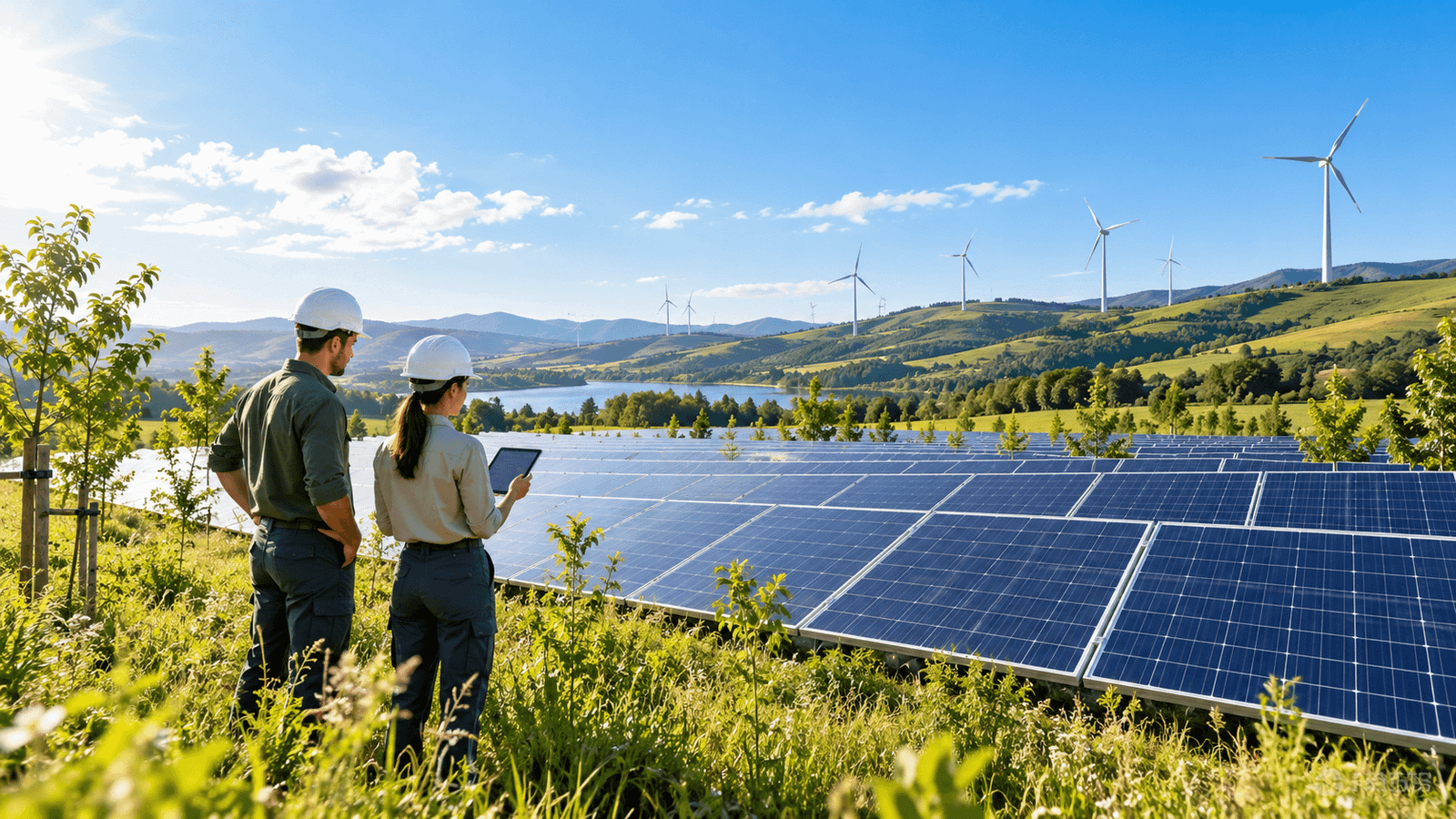
| Example | How It Reduces Environmental Impact |
|---|---|
| Solar panels | Generate electricity without fossil fuel combustion or emissions |
| LED lighting | Uses a fraction of the energy of traditional incandescent bulbs |
| Electric vehicles | Eliminate tailpipe emissions, reduce reliance on fossil fuels |
| Smart thermostats | Reduce unnecessary heating and cooling energy use |
| Water-efficient appliances | Significantly reduce water consumption for the same task |
Not necessarily, though there’s overlap. Green technology is a category defined by its environmental purpose, while technological innovation is a broader concept describing any new or significantly improved technology that’s successfully put into practical use, regardless of whether it has an environmental focus. A new green technology can absolutely be a technological innovation, but not every technological innovation is specifically green, since innovation can happen in fields entirely unrelated to environmental impact.
Even when green technology is proven and available, adoption depends heavily on cost, existing infrastructure, policy incentives, and consumer awareness. A technology can be environmentally superior on paper but face slow adoption due to higher upfront costs, lack of supporting infrastructure (like charging stations for electric vehicles), or simple unfamiliarity. This is why government incentives, infrastructure investment, and public education often play as large a role in green technology adoption as the underlying technology itself.
No, renewable energy is one category within the broader concept of green technology, which also includes energy efficiency, water conservation, sustainable transportation, and waste reduction technologies, among others.
It depends on the specific technology. Some green technologies have higher upfront costs but lower operating costs over time, while others, like LED lighting, are now often cost-competitive or cheaper than conventional alternatives even upfront.
In practice, yes — many technologies offer environmental benefits without being entirely emissions-free or impact-free. Green technology exists on a spectrum rather than a strict binary category.
Green technology refers to any technology designed to reduce environmental impact, spanning renewable energy, energy efficiency, water conservation, sustainable transportation, and waste reduction. It overlaps with but isn’t identical to the broader concept of technological innovation, and its real-world adoption depends as much on cost, infrastructure, and policy as it does on the underlying technology itself. Understanding these categories and distinctions provides a clearer, more practical framework for evaluating specific green technology claims and products.